
Below are two short extracts from Magdalene, the third book in the Addlestone Chronicles trilogy.
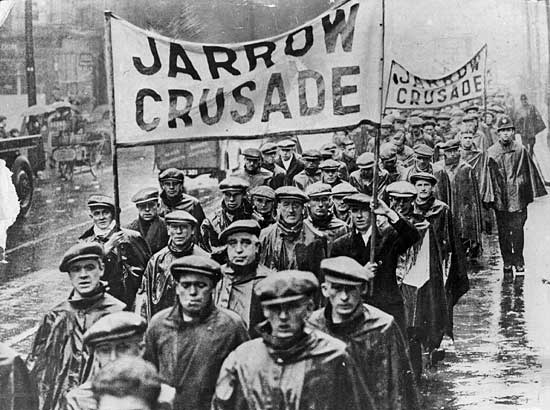
“Louise lost interest in James’s narrative and began reading an article on the second page of The Times. It described the Jarrow March. This morning, two hundred men had begun to walk from Jarrow, in South Tyneside, to London, many accompanied by their pet dogs. Their goal was to deliver a petition to the House of Commons protesting against the crippling poverty and unemployment in the north of England.”
I elaborated on this important historical event in the Historical Background section of this novel:
“In chapter ten, I made a brief reference to the Jarrow March, or what is now known as the Jarrow Crusade. Over the period of one month, two hundred unemployed men walked from Jarrow, in South Tyneside, to London—a distance of more than three hundred miles. Their aim was to deliver a petition to Parliament. They arrived on October 31, 1936. Their petition was accepted but never discussed or debated.
Despite the marchers’ belief that they had failed to expose the plight of the north of England’s factories, towns, and villages, the march has since been recognized as a defining societal event of that decade. It set the scene for post-war social reform, including the development of British regional policy that identified what were first called ‘Depressed Areas’ and later referred to as ‘Assisted Areas.’ The Labour government later established the National Health Service in 1948. This became part of the social awareness programs that led to the post-war expansion of council housing to replace the antiquated housing stock, mostly dating from the Victorian and Edwardian eras prior to WWI.”
Despite the damage and cost of WWII, as well as the debts incurred, under the Labour government formed by Clement Attlee in 1945, the UK found the will to invest in healthcare and infrastructure to improve the lives of its people. Although rationing was still in place until mid-1954, priorities were clear for adopting universal healthcare and improving the housing stock.
The US remains the only developed country without a system of universal healthcare. More than 7% of its citizens (this figure only includes citizens and excludes residents, legal or otherwise)—or over 25 million people—remain without access to any form of healthcare. This number is set to rise as Project 2025 takes hold, not to mention the red states’ prohibition of women’s access to reproductive healthcare and bans on their travel to seek treatment or advice elsewhere.